
Why Success Becomes Normal So Quickly
And why companies need a future people can look forward to
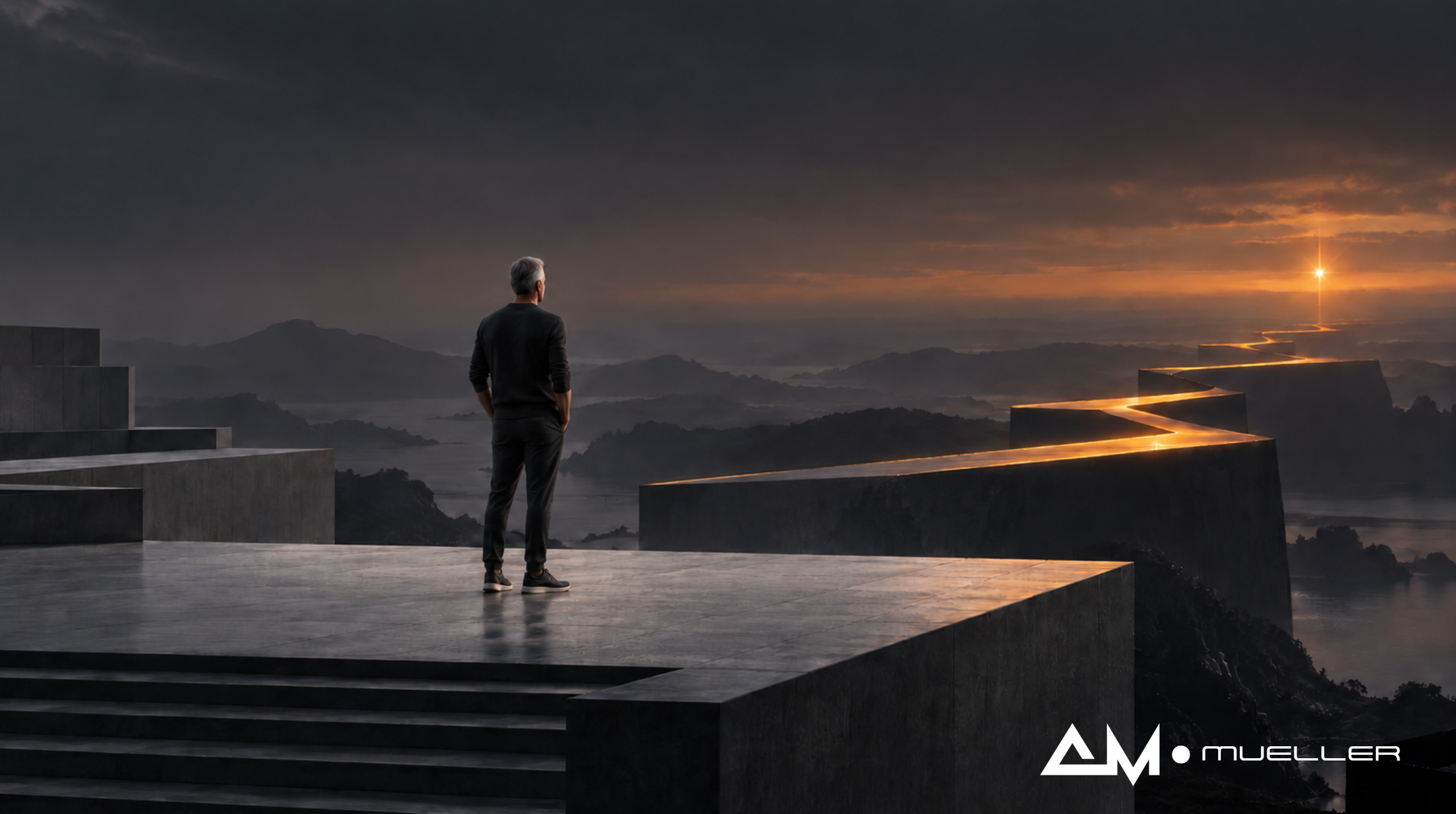
I’ve come to believe: we don’t just want to reach many things.
We want to be on the way to them.
We look forward to a trip for months. We plan a house, a new car, a professional
challenge, or a big project. We explore possibilities, make decisions, and imagine
what it will feel like once everything is done.
Then the moment arrives.
The house is move-in ready. The car is in the driveway. The contract is signed.
The project is finished.
For a moment, it feels great.
And shortly after, it’s normal.
Not bad. Not worthless. Just no longer extraordinary.
The special thing doesn’t necessarily lose its value. It loses its tension.
Anticipation Lives on Possibility
Maybe that’s why anticipation is often the greatest joy.
As long as something still lies ahead of us, it isn’t fully fixed. In our imagination
there’s no routine, no maintenance, no compromises, and no small disappointments.
The future lies open before us.
We don’t just enjoy the expected outcome. We enjoy every possibility we attach to it.
The finished result can hardly compete with that idea. It’s concrete. It has edges.
And above all, it becomes part of our everyday life very quickly.
Psychology calls this hedonic adaptation: people adapt astonishingly fast to
improvements.
What was a big wish yesterday is reality today and normal tomorrow.
Goals Give Us Direction, Not Lasting Happiness
We like to tell ourselves:
Once I reach this goal, I’ll be satisfied.
Once the project is finished, things will calm down.
Once I reach this position, this house, or this financial security, I’ll have arrived.
But we never really arrive.
An achieved goal usually changes our state only temporarily. It creates a moment
of joy, pride, or relief. Then the adjustment begins.
That doesn’t mean goals are pointless.
Quite the opposite.
Without goals we lack direction. Without challenges we lack development. And without
something to look forward to, life quickly turns into managing what’s already been
achieved.
Goals focus energy. They put us in motion. They force us to decide and give our
actions direction.
They’re just not built for lasting satisfaction.
Even a Successful Ending Is a Loss
When a big project ends, it’s not only a problem that disappears.
A task disappears too.
Suddenly the open questions are gone, the decisions, the progress, and sometimes
even the conflicts that occupied us for months.
We won. But the playing field is gone.
Maybe that’s why an unexpected emptiness sometimes follows big successes.
Not because the success was worthless. But because the path there gave our life more
structure, tension, and meaning than the finished result did.
“Done” is therefore a strange state.
It’s success and loss at the same time.
The Same Thing Happens in Companies
Companies set goals.
A certain revenue target has to be hit. A product has to ship. A funding round has
to close, a new market has to open, or a company has to be sold successfully.
People work toward it for months or years.
Then the goal is reached.
There’s a presentation, a bonus, maybe a celebration. The numbers get shown.
The success gets praised.
And the next Monday, the new quarter begins.
The extraordinary result becomes the new baseline. The record becomes the new minimum.
Success becomes expectation.
What was celebrated yesterday is part of today’s budget.
Companies get used to success too.
When all that follows is a higher revenue target, no new meaning is created.
Only more pressure is.
A Goal Is Not Yet a Vision
“We want to grow 20 percent next year” is not a vision.
It’s a goal.
“We want to become market leader” usually isn’t a vision either. It describes a
position, not yet a future that makes a recognizable difference for customers,
employees, or society.
A real vision answers a bigger question:
What future do we want to create that wouldn’t exist without us?
It has to be ambitious. Bigger than what feels comfortably achievable with today’s
structures.
Maybe even so big that it initially seems almost unreachable.
But it has to stay credible.
People need to be able to see that this future is possible and that their work
contributes to making it real.
A good vision isn’t fantasy.
It’s a plausible possibility, big enough to move people.
The North Star Prevents Managing What’s Already Been Achieved
The vision describes the future a company wants to create.
The North Star keeps the direction stable.
Strategic goals mark the next milestones.
Operational measures make sure the company actually moves.
The North Star doesn’t have to be reached every year. Its job is different. It shows
whether the company is still heading the right way.
That creates something many companies lack: shared anticipation.
Not the shallow enthusiasm of a motivational event. But the well-founded expectation
of working together on something meaningful.
What’s true for people is true for companies too:
Without a picture of the future, success quickly turns into managing what’s
already been achieved.
Vision Alone Isn’t Enough, Though
A big sentence on the wall doesn’t sustain a feeling of joy, belonging, or recognition.
For that, people need to experience in everyday life that something is moving.
They need to understand:
- Where do we want to go?
- Why does it matter?
- What do I contribute to it?
- How do we recognize progress?
- Which milestones have we already reached?
A vision creates meaning.
Visible progress creates motivation.
Recognition creates belonging.
Milestones celebrated together create energy for the next stretch.
Companies therefore can’t just look at the final result. They also have to make
the path there visible.
Because if progress only becomes visible at year-end, motivation stays a matter
of faith for months.
People Don’t Need Permanently More
The answer can’t be to simply announce the next, even bigger goal after every success.
More revenue. More growth. More efficiency. More market share.
At some point, ambition turns into an endless loop.
People don’t need permanently more.
But they need development.
They want to experience that their work makes a difference, that they’re learning,
that they’re overcoming obstacles together, and getting closer to a meaningful future.
The difference matters.
Whoever keeps demanding more creates exhaustion.
Whoever enables development creates momentum.
Vision Without Execution Stays Hope
A vision can inspire people. But it can’t replace poor leadership, unclear decisions,
or conflicting priorities.
If nobody knows which customers really matter, what counts as a qualified opportunity,
or who’s accountable for critical decisions, even the most beautiful North Star
won’t help.
Then the vision stays hope.
So a company needs both:
A future big enough to move people.
And an operating system that enables daily progress in that direction.
Vision without execution stays a poster.
Execution without vision becomes a machine that runs faster and faster,
without knowing where to.
Maybe Success Isn’t a State, But a Rhythm
Anticipation is often the greatest joy.
But it’s not the only one.
There’s the joy of development. The joy of shared progress. The pride in a milestone
reached. The recognition for a contribution made. And eventually, curiosity about
what comes next.
None of these phases lasts forever.
Maybe it doesn’t have to.
A good life and a good company may not consist of finally arriving somewhere.
They live on a reasonable rhythm of imagination, effort, progress, success,
recognition, and new orientation.
A company needs more than goals, therefore.
It needs a future people can look forward to.

